Medicine by Design invests $1 million to advance bold new ideas in regenerative medicine
Seven funded projects poised to impact many diseases including cystic fibrosis, ALS and vision loss.
Seven funded projects poised to impact many diseases including cystic fibrosis, ALS and vision loss.
Nanotechnology expert brings rich experience in academia and industry to the Institute of Biomedical Engineering.
Research to impact cancer, Alzheimer’s disease, autism, aneurysm and more.
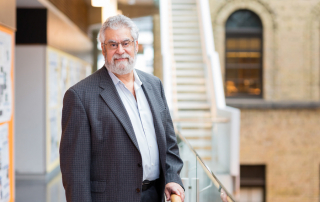
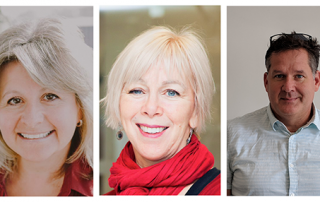
The Banting and Best Diabetes Centre, University of Toronto (U of T), has published a profile honouring the work of Medicine by Design Executive Director Michael Sefton, who is also a University Professor at the Institute of Biomedical Engineering and the Department of Chemical Engineering & Applied Chemistry at the University of Toronto (U of T).
$300,000 investment will accelerate new therapies and create new research tools.
New version is more stable than the protein that occurs in nature, and could lead to new treatments for reversing nerve damage caused by traumatic injury or stroke.
The technique could point the way toward new treatments with the potential to reverse forms of vision loss that are currently incurable.
Data generation, evidence of clinical effectiveness, cost and social values among the key considerations
How do trainees get started on a path toward developing a product or starting a company? What steps do researchers need to take to move their regenerative medicine discoveries from the lab toward clinical impact? These are just some of the questions an expert panel tackled on July 30 at a virtual event titled Translating Research to Impact – Leveraging Our Ecosystem.
Cross-species study shows that Type 2 diabetes drug metformin could change the way childhood brain injury is treated
$3 million investment to initiate answers to key questions that will transform health care
Discovery to provide insights into liver development and disease progression
Weekly webinar series for trainees to cover key concepts in translation and commercialization of regenerative medicine.
A team of researchers led by scientists at the University of Toronto has delayed the onset of amyotrophic lateral sclerosis (ALS) in mice. They are cautiously optimistic that this research, which was funded in part by a Medicine by Design 2018 New Ideas Award, combined with other clinical advances, points to a potential treatment for ALS in humans.
Thirty-one research projects at U of T and its affiliated hospitals selected for funding to contribute to the global fight against the novel coronavirus.