
News

First Medicine by Design entrepreneur-in-residence to help accelerate research discoveries into therapies for patients

Entrepreneur-in-residence to work on bridging the gap between foundational research funded by Medicine by Design and the creation of products or ventures that will impact human health. 

By |2021-11-08T10:29:56-05:00November 1st, 2021|Categories: News|

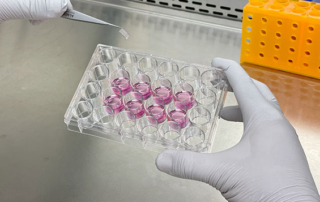
New Medicine by Design-funded method for testing muscle repair in a dish to impact development of stem cell-based therapies

Scientists at the University of Toronto have discovered a novel way to test self-repair of skeletal muscle, a method with the potential to accelerate treatments for diseases like muscular dystrophy.

By |2022-04-12T18:38:44-04:00October 7th, 2021|Categories: News|Tags: , , , , , |

Medicine by Design-funded research finds transplanting insulin-producing cells with blood vessels may help reverse diabetes

Researchers have engineered a new method to improve the survival and potency of cell transplants to treat diabetes.

By |2021-09-07T16:21:04-04:00September 7th, 2021|Categories: News, Research Publication|Tags: , , |

Medicine by Design partners with the Ajmera Transplant Centre to translate the next generation of regenerative medicine therapies to the clinic

Regen Med in the Clinic, a new partnership between the Ajmera Transplant Centre and Medicine by Design, aims to create linkages between clinicians and scientists & engineers.

By |2021-09-07T10:03:31-04:00August 31st, 2021|Categories: News|Tags: , , , |

Medicine by Design’s Pivotal Experiment Fund invests $1 million in four research teams to bridge the “valley of death” funding gap

Funding gives cutting-edge regenerative medicine concepts impacting heart disease, lung transplantation, degenerative brain disease and end-stage liver disease a pathway to clinical translation.

Medicine by Design-funded research uncovers important gap in knowledge of tissue development

Computational biology study found two fundamental mechanisms involved in the cell play important roles and may help better control cells used in regenerative medicine applications

Go to Top